
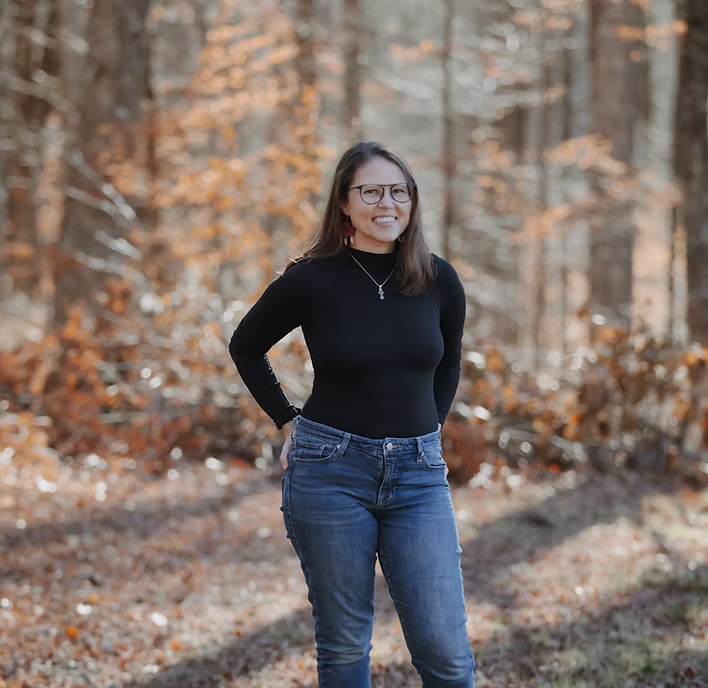


April Brown has spent the past 20 years supporting educators and students across diverse educational settings, beginning her career in Michigan as a special education teacher before moving to Belize to help launch a private school rooted in inquiry, equity, and place-based learning. After her oldest daughter’s birth in 2016, April transitioned into curriculum development, creating content for school districts, nonprofits, nationally accredited learning centers, and education companies. Her expertise includes social and emotional learning, neurodiversity-affirming practices, and mental health-focused curriculum design. She has also served as an instructional and wellness coach, Program Director at The Center for Social Resilience, an adjunct instructor at Antioch University New England and Cal State East Bay, the Director of Learning and Development for Educator Forever, and the Director of Learning Support for an innovative independent school in Vermont.
A certified Trauma-Informed Education Specialist and Peer Support Facilitator, April is passionate about equipping educators with the tools to implement trauma-informed practices effectively. She holds a degree in psychology and special education from Grand Valley State University and a Master’s in Education with a focus on mindfulness and sustainable teaching practices from Antioch University New England. After her youngest daughter’s premature birth and three-month hospital stay in 2022, April decided to pursue her Master’s in Social Work at Columbia University. She will graduate in 2027 and utilize her skills to continue to promote healing and wellness in her community and beyond. April lives in New England with her husband, daughters Harper and Willow, and their two lively dogs. She enjoys adventure, travel, and challenging the status quo, while also contributing articles to PBS SoCal, Britannica for Parents, and Harvard’s Making Caring Common initiative.
We can change.
I firmly believe schools CAN be places where healing, connection, and joy are prioritized.
But, first, we have to disrupt the dehumanizing practices and toxic systems that infiltrate our school walls.


